What is the best way to deal with damaged and undernourished hair, you might ask, as someone who’s worked with too many diy tricks, Grandma’s tricks, and all that the world, especially the internet, tells us all about our hair and likewise parts. It is important for us to wisely take care of ourselves to fully reach our highest potential. Hair is a great way to reach where we want to go in our daily lives.

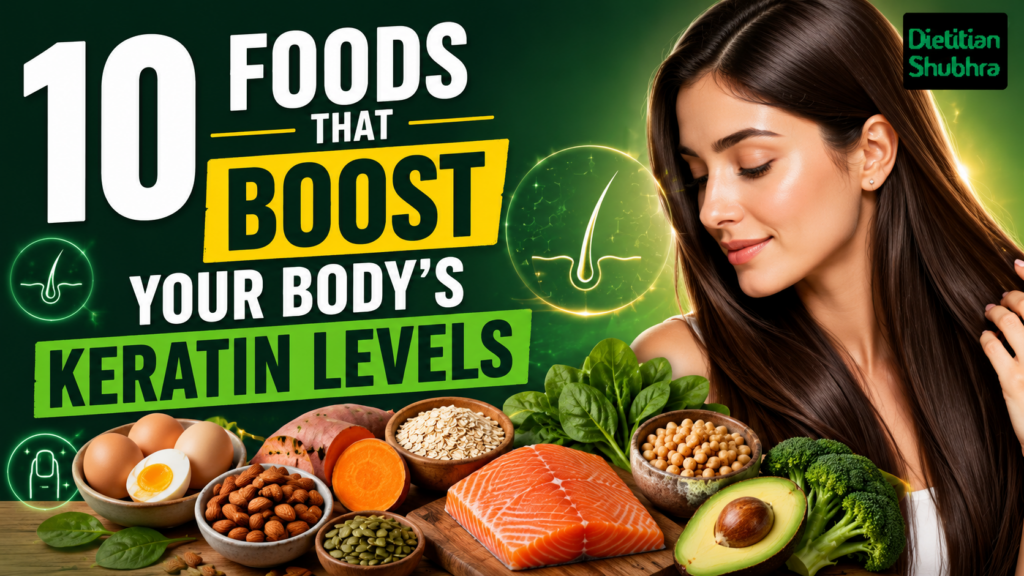
Keratin, one of the main components of our hair, helps us by preventing hair fall and playing a major role in protein synthesis. Having supplements is not the only thing to help increase our hair production. Our outer personality can very well be affected by the people we surround ourselves with, but the real matters lie within our diet, the foods we eat, the blogs we read, and the media we consume, which is why we are here with the 10 Foods to boost your Body’s Keratin Levels.
Almonds can be a valuable addition to your diet if you’re aiming to improve hair health and potentially boost keratin production. Almonds provide a source of plant-based protein, which is essential for building and maintaining the structure of hair. Keratin itself is a protein, and consuming adequate protein ensures the body has the building blocks it needs for healthy hair.
Blueberries contribute to keratin production indirectly by boosting collagen production, which is closely linked to keratin formation. Vitamin C, abundant in blueberries, is essential for collagen synthesis, and collagen, in turn, supports keratin structure in hair, skin, and nails.
Cinnamon can be helpful in promoting keratin production indirectly by improving blood circulation to hair follicles and potentially stimulating collagen and keratin synthesis, which are important for hair and skin health. While cinnamon doesn’t directly increase keratin, it can create a more favorable environment for keratin production.
Coconut’s role in promoting keratin production is related to its nutritional content and its benefits for overall hair and skin health. Here’s how coconut can be helpful: Keratin is a protein, and consuming protein-rich foods, including coconut milk or coconut meat, can provide the building blocks (amino acids) your body needs to produce keratin. Coconut also contains some biotin, a B-vitamin known to play a crucial role in keratin production and hair health. Coconut oil’s rich content of lauric acid, a medium-chain fatty acid, is particularly beneficial for hair and scalp health.
Eggs help increase keratin in the body because they are a good source of protein and biotin, both of which are essential for keratin production. Keratin is a protein that forms the structural foundation of hair, skin, and nails. Biotin, a B vitamin, plays a crucial role in the synthesis of keratin. Eggs are a complete protein source, meaning they contain all nine essential amino acids that the body needs to build and repair tissues, including keratin.
Sweet potatoes help increase keratin in the body because they are a good source of beta-carotene, which the body converts into vitamin A. Vitamin A is crucial for keratin synthesis, which is the process of building keratin protein. Additionally, sweet potatoes contain biotin, another nutrient that supports keratin production.
Onions contain N-acetylcysteine, which the body converts to cysteine, a component of keratin. They can help increase keratin levels in the body, primarily due to their high sulfur content and the presence of N-acetylcysteine. This sulfur is a key component of keratin, the protein that forms hair, skin, and nails. Onions also contain folate, an essential micronutrient for healthy hair follicles.
Along with being high in vitamins A and C, it promotes keratin and collagen health. Kale can be helpful in increasing keratin production in the body due to its rich content of vitamins and minerals that play a vital role in keratin synthesis and overall hair and skin health. Specifically, kale is a good source of Vitamin A and Vitamin C, both of which are essential for keratin production.
They provide biotin, vitamin E, and selenium, all of which are important for keratin maintenance. Sunflower seeds are a good source of biotin, a B vitamin crucial for keratin production and healthy hair and nail growth. Protein: Keratin itself is a protein, and sunflower seeds provide a good amount of protein, with 1/4 cup offering 7 grams. Adequate protein intake is essential for providing the building blocks for keratin synthesis.
Salmon helps increase keratin in the body because it is a good source of protein and omega-3 fatty acids, both of which are important for keratin production and overall hair, skin, and nail health. Additionally, salmon contains biotin, a vitamin that plays a crucial role in keratin synthesis.
Having these foods as a part of your daily diet can be a very useful thing, and can do wonders for your hair by giving you the right amount of Keratin. A healthy diet and a good environment are a great way to own a head of hair and care for it! For more such insights on Dietary requirements, keep reading, Dietitian Shubhra.
What is keratin, and why is it important?
Keratin is a structural protein found in hair, skin, and nails. It provides strength and resilience, making it essential for maintaining healthy hair, glowing skin, and strong nails.
Do keratin supplements work better than food sources?
While keratin supplements can be beneficial, obtaining nutrients from whole foods is generally recommended for better absorption and overall health benefits.
How long does it take to see improvements in hair and nails after changing my diet?
Typically, noticeable changes in hair and nail health can be observed after several weeks to a few months of consistent dietary improvements.
Is it possible to have too much keratin?
Excessive keratin production can lead to conditions like keratosis pilaris, characterized by rough patches on the skin. It’s essential to maintain a balanced diet to support healthy keratin levels.